
Issue #8
What would you do?

Monthly Recap
Welcome back to our lovely readers! Before you read on to the important news of the month, we would just like to briefly celebrate our wonderful events since we last spoke to you!
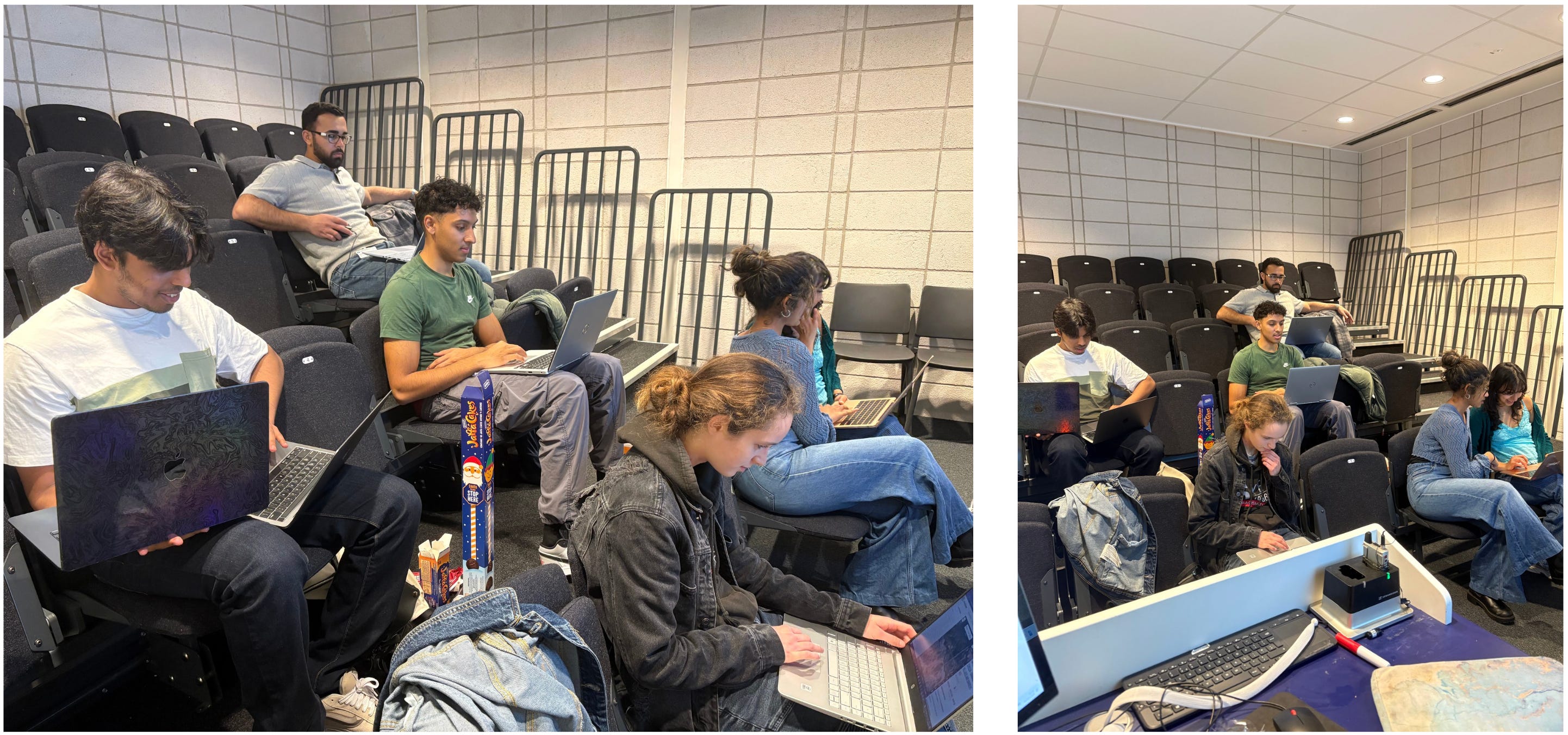
Missing Maps - 30th October
A wholesome evening of humanitarian map-making. Missing Maps is an open, collaborative project in which you can help to map areas where humanitarian organisations are trying to meet the needs of people who live at risk of disasters and crises.
Find out more 👉 here 👈!
Guest Speaker Lucy Hart - 5th November
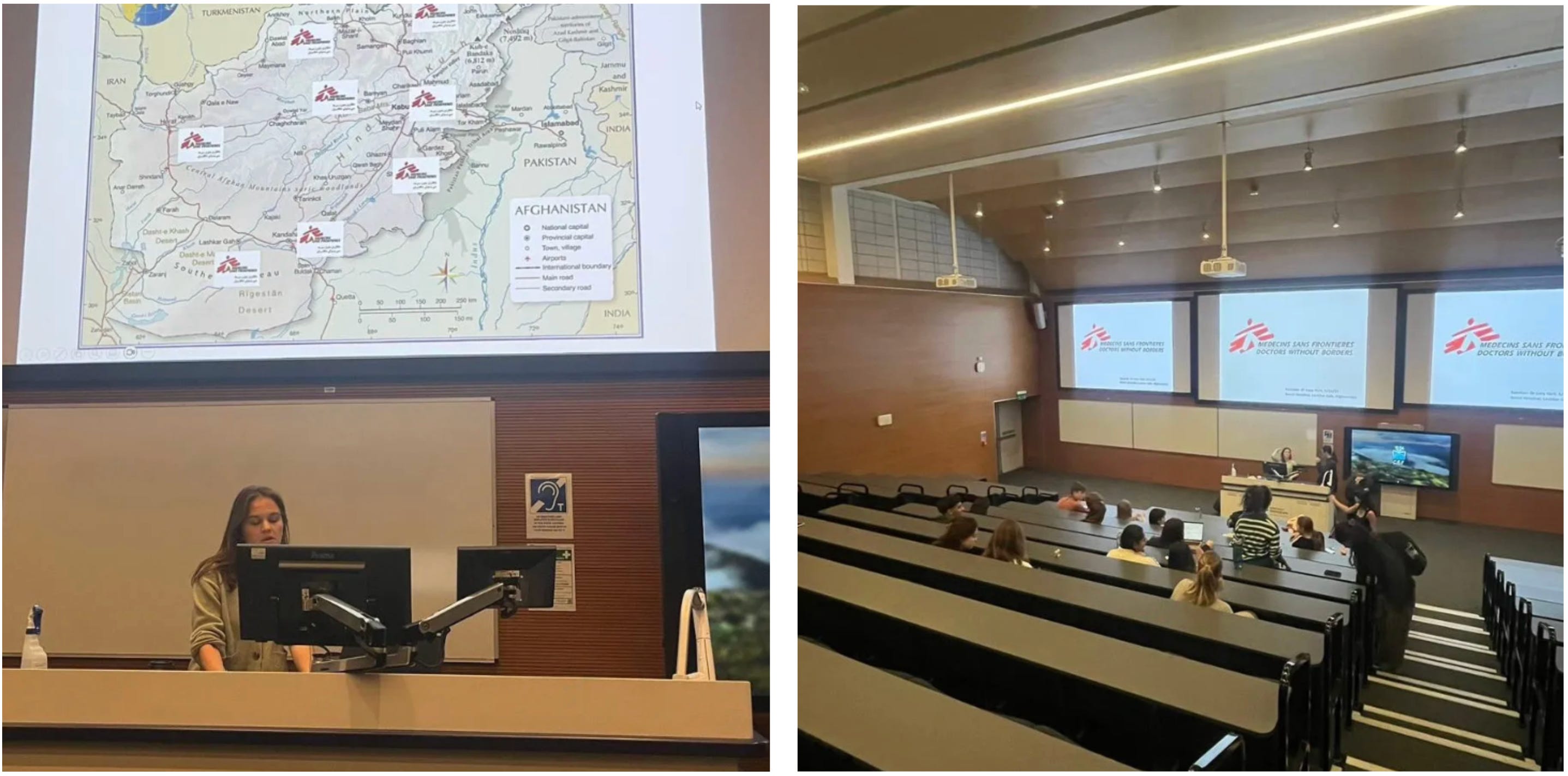
A lovely return from Dr Lucy, a paediatric (soon-to-be) consultant who last spoke to us in September 2023. I (Khushi) attended that talk, and it was a fascinating, eye-opening introduction to the first-hand experience of working as a UK doctor with MSF. Lucy shared insights from her six-month stint in the world’s largest refugee camp in Bangladesh, as well as her anticipatory preparations for deployment to Afghanistan.
Now back with us in 2025, Lucy spoke about her time in Afghanistan, and it was an absolute joy to listen to her and welcome her back to Nottingham.
MSF Now
#1 Same Ceasefire, Different Stories: Crisis in Gaza
(5 min read · How News Coverage Compares With What MSF Sees)
When MSF wrote “The ceasefire is not the end of the extreme suffering in Gaza”, it was in the context of the first phase of the US-brokered ceasefire that came into effect on 10 October 2025. On paper, the the warfare should stop. In reality, MSF staff were still tending to a health system in collapse whilst communities continue to be under fire.
The article doesn’t start with who broke the deal. It starts with patients:
Over 15,600 people waiting for lifesaving medical evacuation out of Gaza, many with complex trauma injuries, cancer, or kidney failure.
At least 740 patients, including 137 children, who died between July 2024 and August 2025 while waiting for evacuation.
Only 14 of 36 hospitals even partly functioning, none fully operational after sustained attacks, shortages, and evacuations.
1,722 health workers killed, including 15 MSF colleagues, and one surgeon detained since 2024.
MSF’s ask is blunt: the ceasefire needs to be sustained and used to evacuate patients, bring in medical supplies, fuel, clean water, food, and shelter, and remove the bureaucratic roadblocks that are literally costing people their lives. It’s a medical, not a diplomatic, starting point.
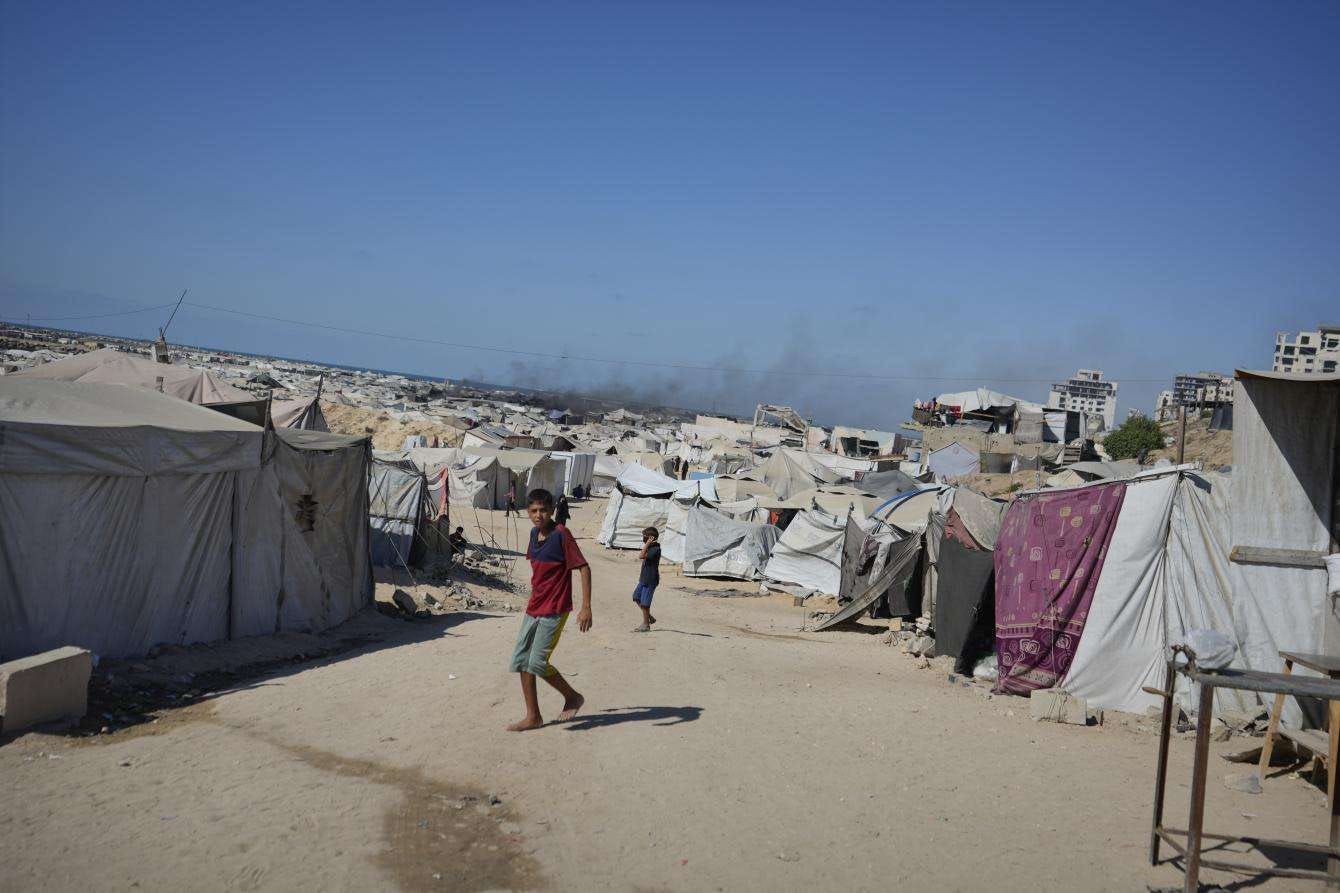
Most Palestinians in Gaza have been displaced multiple times over the last two years.
Queue the Headlines…
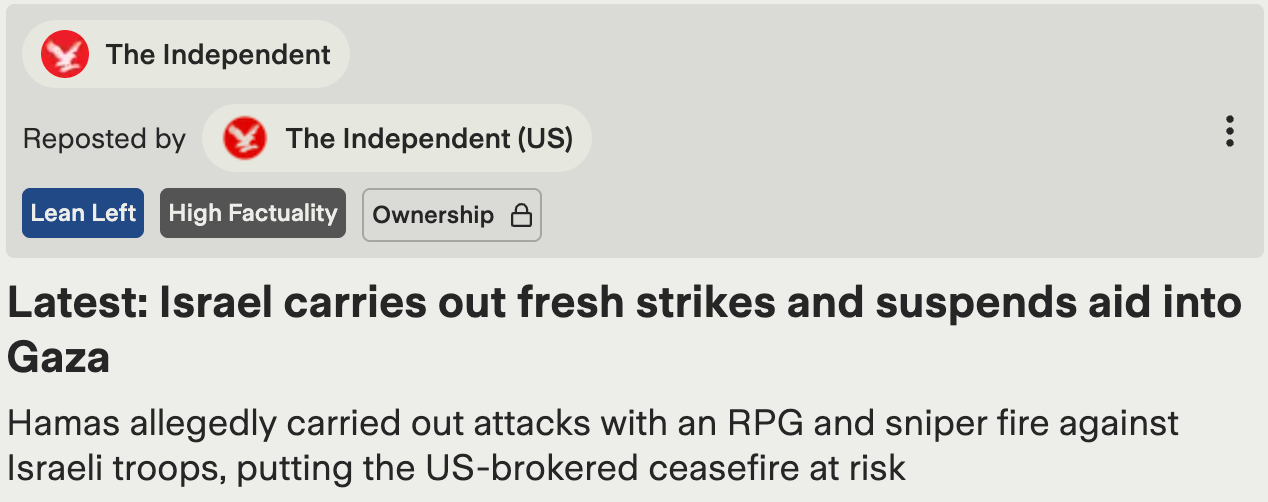
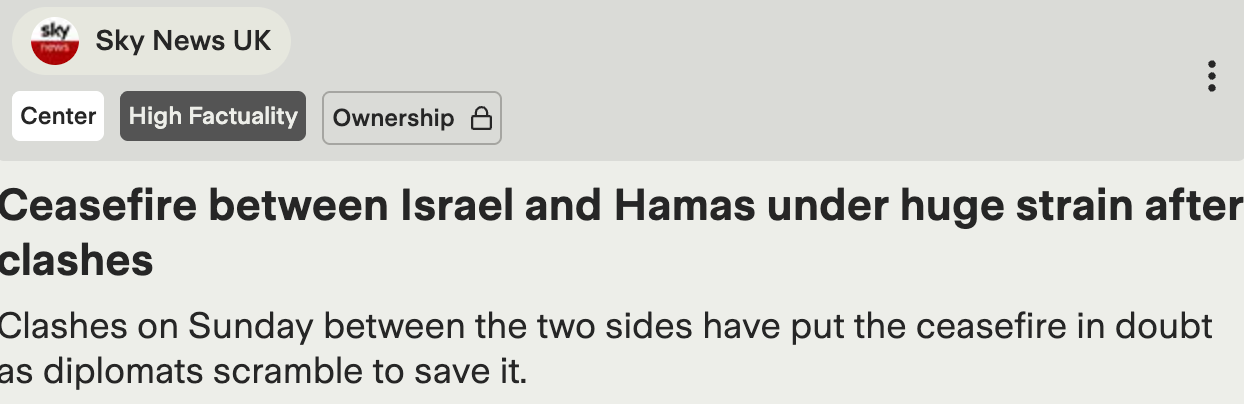
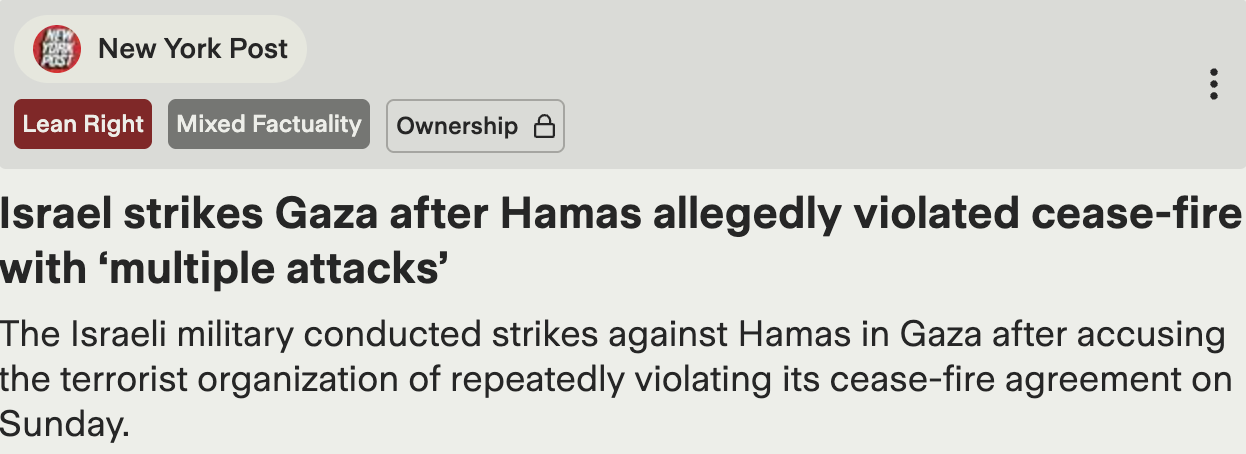
Now put that next to how the same post-ceasefire period is described in mainstream news. Three headlines, all talking about renewed violence and airstrikes after 10 October.
Read full article here 👈
Read full article here 👈
Read full article here 👈
Ground News has mapped this pattern across outlets:
Left-leaning coverage tends to stress Israeli strikes, violations, and Palestinian casualties.
Right-leaning coverage highlights Hamas attacks and Israeli security, often treating strikes as a necessary response.
Centre-leaning outlets try to hold both sides in view, using more neutral language but still sitting inside a political frame.
None of this is about “good” or “bad” journalism. It’s about recognising that headlines make choices: who is named first, whose actions are centred, whose deaths are detailed or left implied. Keep this tension in mind:
The political story: who “broke” the ceasefire, who gets blamed, and whose actions are framed as a justified response.
The media story: how that same moment gets filtered through culture, ideology, and the status quo, depending on whether you’re reading a left, right, or centre outlet.
The humanitarian story: who is still injured, displaced, or stuck on an evacuation list while everyone else argues about the first two.
MSF is planted firmly in that last story. The ceasefire isn’t interesting as a diplomatic trophy, it only matters for what it actually makes possible on the ground: evacuations, supplies, and treatment for patients who don’t have the luxury of waiting while everyone else debates.
Read the full story 👉 here 👈 to find out more!
#2 What Would You Do? Jamaica: Hurricane Melissa
(3 min read · See what you’d decide in an MSF emergency.)
Picture this. It’s October 29, 2025. Hurricane Melissa has just torn through Jamaica. Roads are destroyed, hospitals damaged, and whole communities in St James and St Elisabeth parishes are cut off. You’re leading MSF’s emergency team that just landed after the airport reopened. Every minute counts.
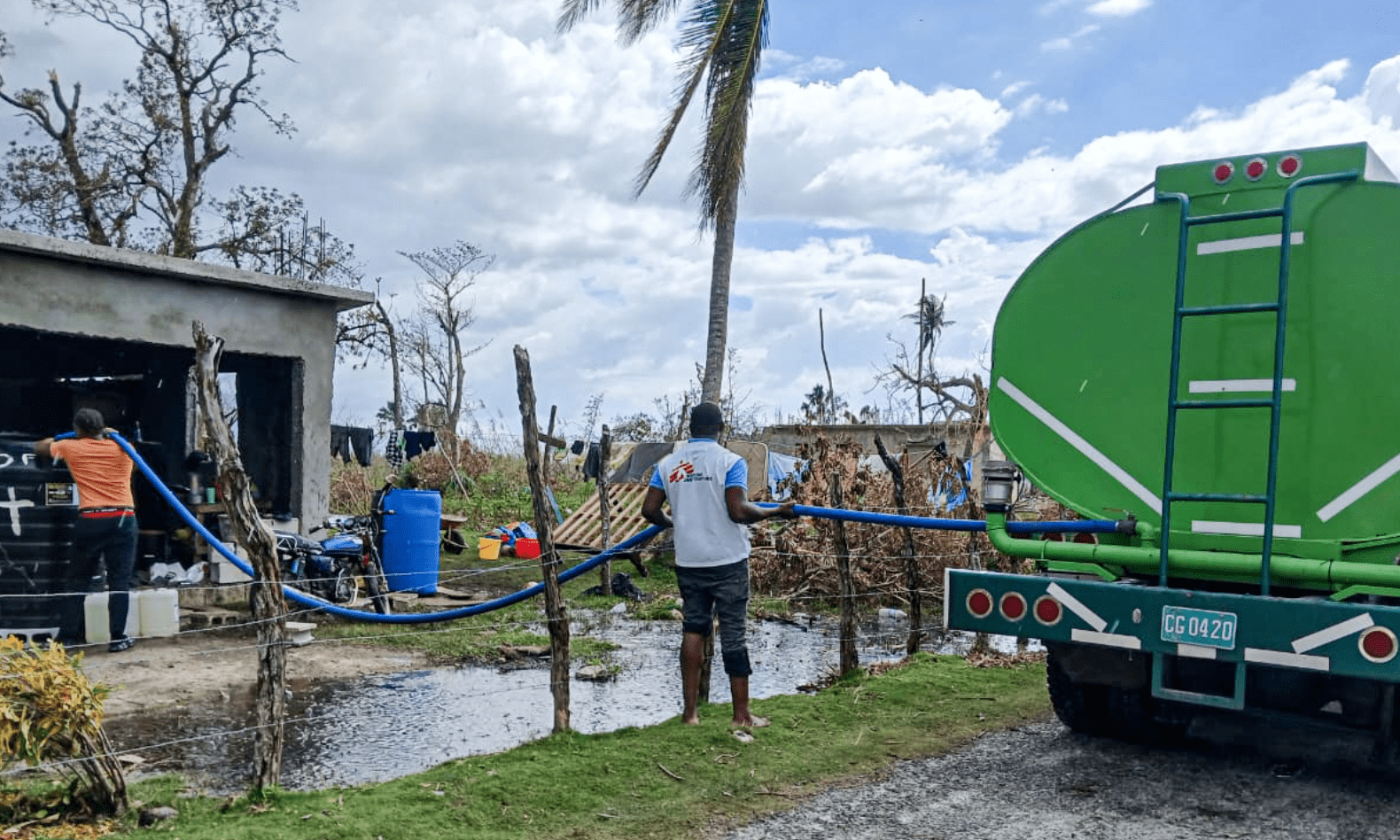
MSF in Slipe, Saint Elisabeth Parish
Step 1 — First decisions
You’ve got one truck, one assessment team, and one satellite phone working after Hurricane Melissa. What’s your first move?
A. Start moving clean water by truck immediately to cut disease risk. → Go to 2A
B. Head to the regional hospital in St James to assess structural damage. → Go to 2B
C. Send your team into remote villages to check who’s been cut off. → Go to 2C
2A — Water first
You launch water trucking in Slipe, St Elisabeth. People finally get clean water, but you’re told the roof of Cornwall Regional Hospital has partially collapsed.
Next step:
Keep all trucks on water and hope the Ministry of Health handles the hospital → 3A1
Keep some trucks going and pull part of your team to fix the hospital’s water and basic services → 3A2
2B — Hospital first
You reach Cornwall Regional Hospital. The maternity ward roof is damaged, there’s no running water, and surgeries are halted.
Next step:
Begin emergency repairs and bring in essential medical supplies → 3B1
Leave the hospital to Ministry engineers and go assess shelters → 3B2
2C — Remote first
You trek into the St Elisabeth hills. Entire villages are cut off. People ask for medicine, food, clean water and a way to contact relatives.
Next step:
Set up basic psychosocial support and temporary internet so people can reach family → 3C1
Focus on reopening routes and getting trucks through with clean water and hygiene kits → 3C2
Step 3 — Outcomes
3A1 — Keep all trucks on water
Outbreaks linked to dirty water are reduced in Slipe and nearby shelters, but the hospital remains barely functional and critical patients wait.
Verdict: ❌ Helpful, but too narrow. Communities benefit, yet a key hospital is left exposed.
3A2 — Split: water + hospital
Shelters keep receiving clean water while part of your team restores water and basic services at Cornwall Regional, allowing surgeries and maternity care to restart.
Verdict: ✅ Strong choice. You’re supporting displaced communities and the main referral hospital.
3B1 — Stay and repair the hospital
You stabilise Cornwall Regional: the roof is patched, water returns, and the operating theatre and maternity ward reopen. Rural communities still wait longer for clean water.
Verdict: ✅ Defensible. Getting the main hospital back online early can save many lives, if outreach follows soon after.
3B2 — Leave hospital, assess shelters
You gather detailed information from several shelters and smaller centres, but the hospital continues to deteriorate without urgent help.
Verdict: ❌ Weak. You’ve collected data instead of acting where the need was most critical.
3C1 — Psychosocial support first
People in remote areas can finally call relatives and receive emotional support, but they still lack reliable access to clean water and medical care.
Verdict: ⚠️ Important, but mistimed. Mental health and connection matter, but shouldn’t come before basic survival needs in the first days.
3C2 — Push supplies through
You reopen routes and get clean water and hygiene kits into cut-off villages. People who were isolated now have essential supplies, though hospital support still needs to follow.
Verdict: ✅ Good early move. Reaching cut-off communities fast is right, as long as you then link them back to stronger medical care.
What MSF actually did
MSF teams reached Jamaica on 1 November. They:
Repaired Cornwall Regional Hospital’s damaged roof and restored its water supply.
Truck-delivered clean water to Slipe, St Elisabeth, and supported three local health centres.
Distributed hygiene kits, filters, mosquito nets, and tarpaulins.
Offered psychosocial support and temporary internet connections for isolated communities.
Their rapid assessment guided the national response and prevented waterborne disease outbreaks.
Think you chose wisely?
Every answer had trade-offs. That’s the reality of emergency response.
Read the full story 👉 here 👈 to find out more!
Upcoming Events
Christmas Bake Sale
Tuesday 25th November → Portland Building
If you would like to get involved with helping out at the bake sale or baking for it, please head over to our insta and drop us a message!
FrenchSoc Medical French Speaking
Tuesday 2nd December → Watch the insta for more details !
Socials
Thanks for reading MSF Monthly! This post is public so feel free to share it :P
Remember, “independence, neutrality and impartiality” ~ Rhyanna and Khushi
See you in the next one! 🩺